Short Span Roofing vs Long Span Roofing: Which is Better for Your Project?
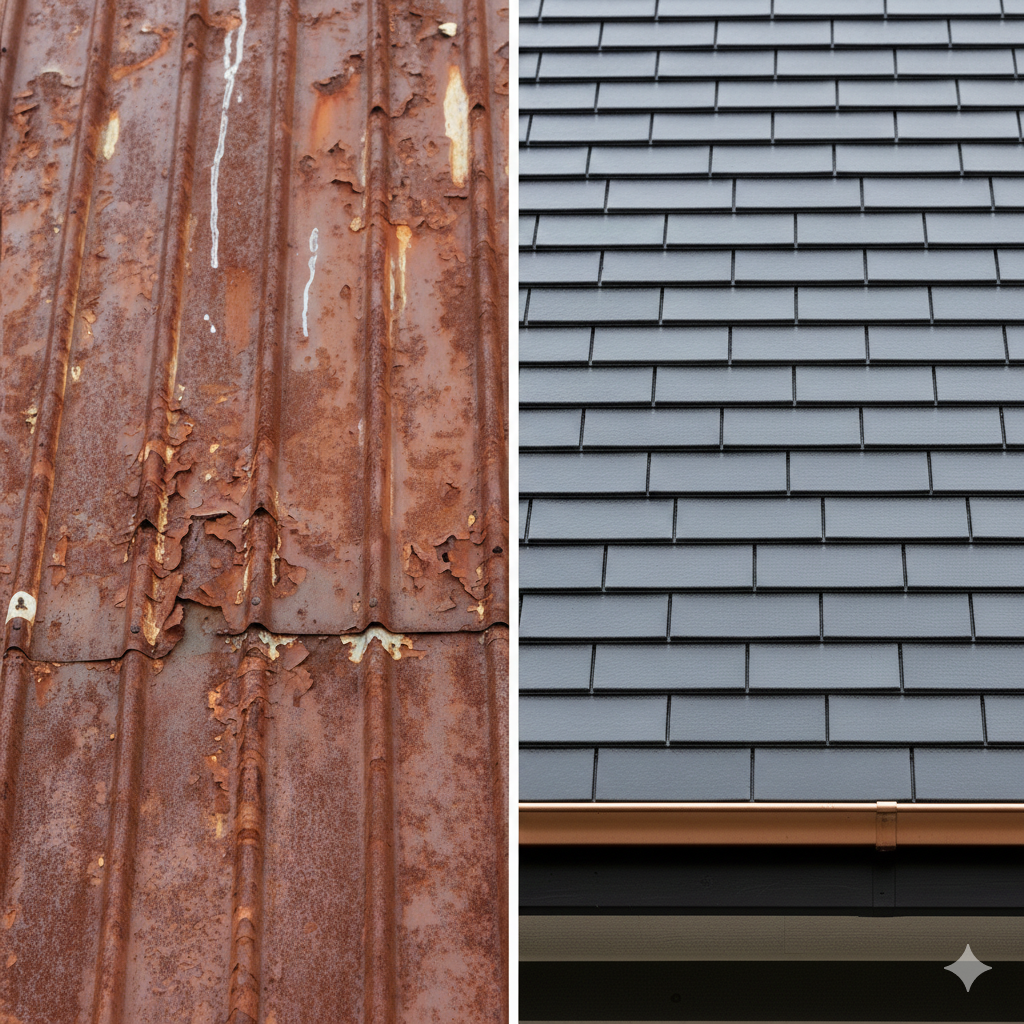
The choice between short-span roofing vs long-span roofing is one of the most fundamental decisions in the structural design of a building. The “span” refers to the horizontal distance between two supporting elements, such as walls or columns. Understanding the differences is crucial to ensuring structural integrity, cost-effectiveness, and meeting the functional requirements of your building.
Defining Short Span and Long Span Roofing
The main distinction lies in the supported distance:
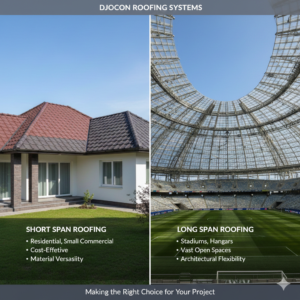
- Short Span Roofing: Generally refers to roofing systems spanning under 30 meters (100 feet). These systems typically utilise more frequent internal columns or supports, allowing for simpler engineering and lighter materials. This category includes most standard residential and smaller commercial buildings.
- Long Span Roofing: Refers to structures designed to cover large, uninterrupted open areas, often spanning over 30 meters (100 feet) without intermediate supports. These systems require advanced engineering and specialised materials like steel trusses, space frames, or cable-supported structures.
READ ALSO: What to Look for When Roofing Commercial Buildings
The Benefits of Short Span Roofing Systems
For residential, small-to-medium warehouses, and typical office buildings, short-span roofing offers numerous benefits:
- Cost-Effectiveness: Due to the shorter distance between supports, the structural elements (like rafters and purlins) can be smaller, lighter, and more economical. The engineering is less complex, leading to lower design and construction costs.
- Simplified Construction: The installation process for short-span roofing is typically faster and more straightforward, often utilizing common roofing materials such as standard-sized metal sheets, shingles, or tiles.
- Material Versatility: A wider range of roofing materials, from asphalt shingles to concrete tiles and lightweight metal sheets, is suitable for smaller spans, offering greater flexibility in aesthetics and budget. Knowing the difference between short-span vs long-span roofing will help.
- Accessibility for Maintenance: Short-span roofing is generally easier to access and maintain due to the more conventional structural layout and closer spacing of supports.
Why Long Span Roofing is Necessary
While short-span roofing is ideal for conventional projects, long-span roofing is the indispensable choice for applications where vast, unobstructed space is a necessity:
- Large, Open Spaces: Venues such as sports stadiums, aircraft hangars, exhibition halls, auditoriums, and large industrial warehouses rely on long-span designs to eliminate internal columns that would obstruct views or movement.
- Architectural Flexibility: Long span structures enable impressive and complex architectural forms, providing architects with the freedom to create expansive, column-free interiors.
- Optimised Functionality: In commercial and industrial settings, a column-free floor area created by long-span roofing maximises usable space for machinery, logistics, and large crowds.
Making the Right Choice
Ultimately, the decision of whether short-span roofing or long-span roofing is better is not about inherent superiority but suitability for a specific project.
- If your project is a standard-sized building, such as a home, small retail unit, or small warehouse, short-span roofing is the pragmatic and cost-effective solution. It is easier to construct, provides material flexibility, and is more economical.
- If your project demands a vast, uninterrupted interior space, where columns are simply not an option, like an airport terminal or an arena, then the engineering and higher investment of a long span structure are essential and justified.
The better option is the one that aligns most effectively with your building’s size, functional requirements, and overall budget. To choose between short span vs long span roofing;
Contact Djocon Roofing Systems for a professional consultation.
Watch this video for more knowledge on Short-span vs long-span roofing.