Popular Roof Designs in Ghana
You’ve spent months, maybe years, saving for your dream home in East Legon, Kumasi, or perhaps a quiet coastal spot in Prampram. The walls are up, the lintel is cast, and now comes the most critical decision of the entire project: the roof.
In Ghana, a roof isn’t just a lid on a box; it’s a statement of status, a shield against the torrential rains of June, and your primary defence against the scorching tropical sun.
Many Ghanaian homeowners fall into the “cheapest is best” trap, only to find their beautiful ceilings ruined by leaks two years later or their living rooms feeling like an oven by noon.
This is why understanding roof designs in Ghana is about more than just picking a colour. It’s about merging the aesthetics of modern architecture with the structural demands of our climate.
The market has shifted significantly. We are seeing a move away from the basic corrugated iron of our grandparents’ era toward sophisticated roof trends 2026 that emphasise “secret” designs, stone coatings, and high-performance alloys.
Whether you are a first-time builder or a seasoned real estate developer, this guide will walk you through the top designs, costs, and strategic advice to ensure your investment stands the test of time.
Current Design Trends: What’s Hot in 2026?
The Ghanaian skyline is changing. If you drive through developing neighbourhoods like Oyarifa or Appolonia City, you’ll notice that the bulky, high-pitched roofs of the early 2000s are making way for sleeker silhouettes.
The Rise of the “Secret Roof” (Hidden Roofing)
Perhaps the most dominant trend in modern architecture across Accra is the hidden roof. By using parapet walls to conceal the roofing sheets, architects create a minimalist, flat-top look that resembles a concrete slab but offers the drainage benefits of a pitched roof. It’s a favourite for those seeking a contemporary, “uniquely Ghanaian” luxury vibe.
Mono-Pitch and Butterfly Roofs
For those daring to be different, mono-pitch (single slope) roofs are gaining traction. They are cost-effective because they require fewer trusses and allow for large, clerestory windows that flood the home with natural light, reducing your electricity bill.
Earthy Tones and Matte Finishes
Forget the bright, glossy reds of the past. The roof trends 2026 favour “nature-inspired” palettes. Think Charcoal Grey, Deep Forest Green, and Terracotta. These colours don’t just look sophisticated; they hide the dust of the Harmattan season much better than lighter or shinier alternatives.
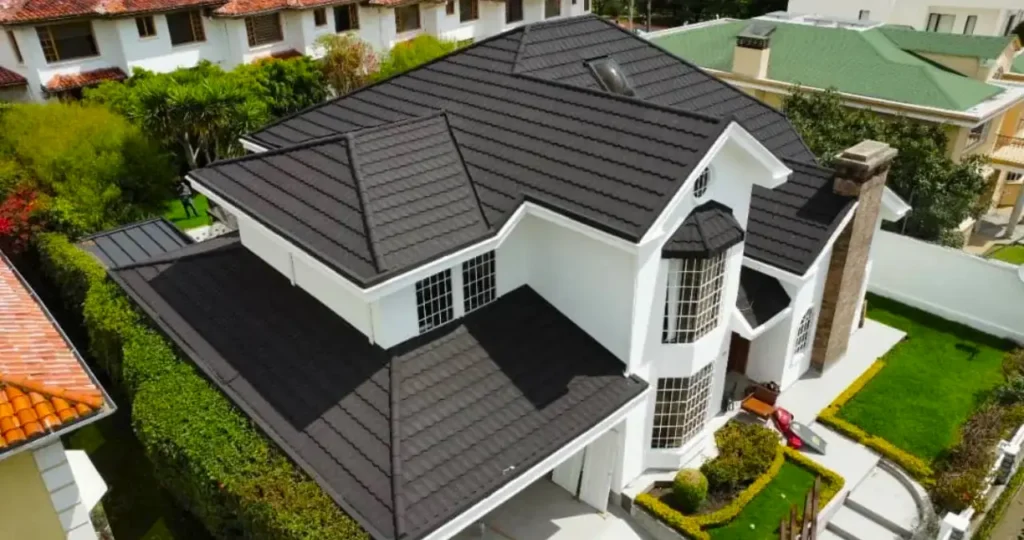
Hip and Valley Roof: When discussing premium roof designs in Ghana, the Hip and Valley roof stands out as the ultimate choice for large, multi-wing villas and luxury estates. If you are building a house with an “L,” “T,” or “U” shape, common in neighbourhoods like East Legon Hills or the plush suburbs of Kumasi, this is likely the design your architect has proposed.
Sloping Roof: You’ve likely seen them popping up in East Legon Hills, Oyarifa, and the sleekest parts of Kumasi, homes that don’t look like the traditional “A-frame” houses we grew up with. They have a sharp, slanted profile that looks like it belongs in a high-end architectural magazine.
Lean-To Roof (Skillion): If you are looking for the most cost-effective way to achieve a high-end, contemporary look, the Lean-To roof (also known as a Skillion roof) is your answer. In the landscape of roof designs in Ghana, the Skillion has evolved from being a simple solution for porches and sheds to becoming the primary choice for luxury “cube” homes and modern apartments in urban hubs.
The Hip Roof: A hip roof slopes on all four sides. It is incredibly stable and offers superior wind resistance. If you are building in a windy area, like near the Atlantic coast, the hip roof is your best friend. It’s also excellent for providing consistent shade around the entire house. It is more expensive. It requires more complex timber (or steel) work and more roofing material because of the many “hips” and valleys.
The Gable Roof
The gable roof is the “A-shape” design we all drew as children. It has two sloping sides and two vertical walls (the gables). It is significantly cheaper than a hip roof. It requires fewer materials and offers the best natural ventilation, allowing hot air to escape through the gable ends. It is more vulnerable to high winds. If a storm hits squarely against the flat gable wall, it can cause structural stress.
The Visual Appeal of Stone Coatings: Why It’s the Gold Standard
If you want a roof that says “I have arrived,” stone-coated steel is the way to go. These aren’t your basic “zinc” sheets. They are made of Alu-Zinc steel coated with natural stone chips from volcanic rock.
Why are they so popular for roof designs in Ghana right now?
- Sound Insulation: Remember the deafening roar of rain on a tin roof? You can’t even hear a conversation. Stone-coated tiles absorb that sound. You can actually sleep during a June rainstorm.
- Heat Reflection: The stone chips act as a natural thermal barrier. They reflect UV rays, keeping your rooms significantly cooler than traditional Aluzinc.
- Longevity: Most stone-coated products come with a 50-year warranty. In a market where many people build to leave an inheritance, this is a massive selling point.
- No Fading: Unlike painted sheets that peel or fade under the harsh West African sun, stone coatings keep their colour for decades.
READ ALSO: Roof Waterproofing Solutions in Ghana: Protecting Your Investment with Djocon Roofing Systems
Investment Advice
Think of your roof as an insurance policy. A cheap roof costs you more over 10 years (leaks, repainting, ceiling repairs) than a premium roof costs upfront. If you are building for rental income, go for a shingle-style stone-coated roof. It increases the perceived value of the property, allowing you to charge higher rent.
Buyer’s Guide: 5 Steps to a Perfect Roof
- Consult an Architect First: Don’t just show a photo to a carpenter. Ensure the roof pitch is compatible with your chosen material.
- Verify the AZ Rating: For Aluzinc, look for AZ150. This indicates the thickness of the protective coating. Anything less (like AZ70) is “budget grade” and won’t last.
- Choose the Right Trusses: While wood is traditional, Lightweight Steel Trusses are becoming the standard in 2026. They don’t warp, they are fire-resistant, and termites can’t eat them.
- Check for “Self-Lock” Technology: If you are doing a secret roof, use self-locking sheets. These don’t require nails through the top of the sheet, which eliminates the most common source of leaks.
- The Rain Test: Never fully pay a roofing contractor until after the first heavy rain. Check every room, especially around the chimney or vents.
Frequently Asked Questions (FAQs)
Q1: Which roof design is cheapest to build in Ghana?
The Gable roof using 0.40mm Aluzinc sheets is generally the most affordable option. It uses the least amount of timber and fewer roofing accessories like hip caps.
Q2: How long does a stone-coated roof last in Ghana?
High-quality stone-coated tiles (like those from Djocon) are designed to last 50 years or more. They are highly resistant to the salt air in coastal regions.
Q3: What is a “Secret Roof”?
It is a design where the roofing sheets are hidden behind a parapet wall. It’s popular in modern architecture because it gives the building a clean, boxy, contemporary look.
Q4: Can I change my roof design after the house is built?
It is difficult and expensive. Changing from a gable to a hip roof requires tearing down the trusses and potentially altering the wall heights. It’s best to decide during the planning stage.
Q5: How do I find a reliable roofing company in Accra?
Look for companies with physical showrooms, Google Business reviews, and those that offer written warranties. Avoid “roadside” suppliers who cannot provide a VAT invoice or technical specs.
Your Roof, Your Legacy
Choosing between the various roof designs in Ghana is one of the most significant decisions you will make for your property. Whether you opt for the wind-resistant stability of a hip roof, the cost-efficiency of a gable, or the undeniable prestige of stone-coated tiles, remember that quality is the only true way to save money.
In the world of modern architecture, the roof is no longer an afterthought—it is the crowning glory of your home. By staying ahead of roof trends 2026 and prioritising high-grade materials and professional installation, you aren’t just building a house; you are securing a legacy that will keep your family safe and dry for decades to come.
Ready to transform your home’s skyline? Contact us for the best roofing type in Ghana.